
Published: 2026-09-19Updated: 2026-09-19Author: Cowin Magnet South Africa Editorial Team
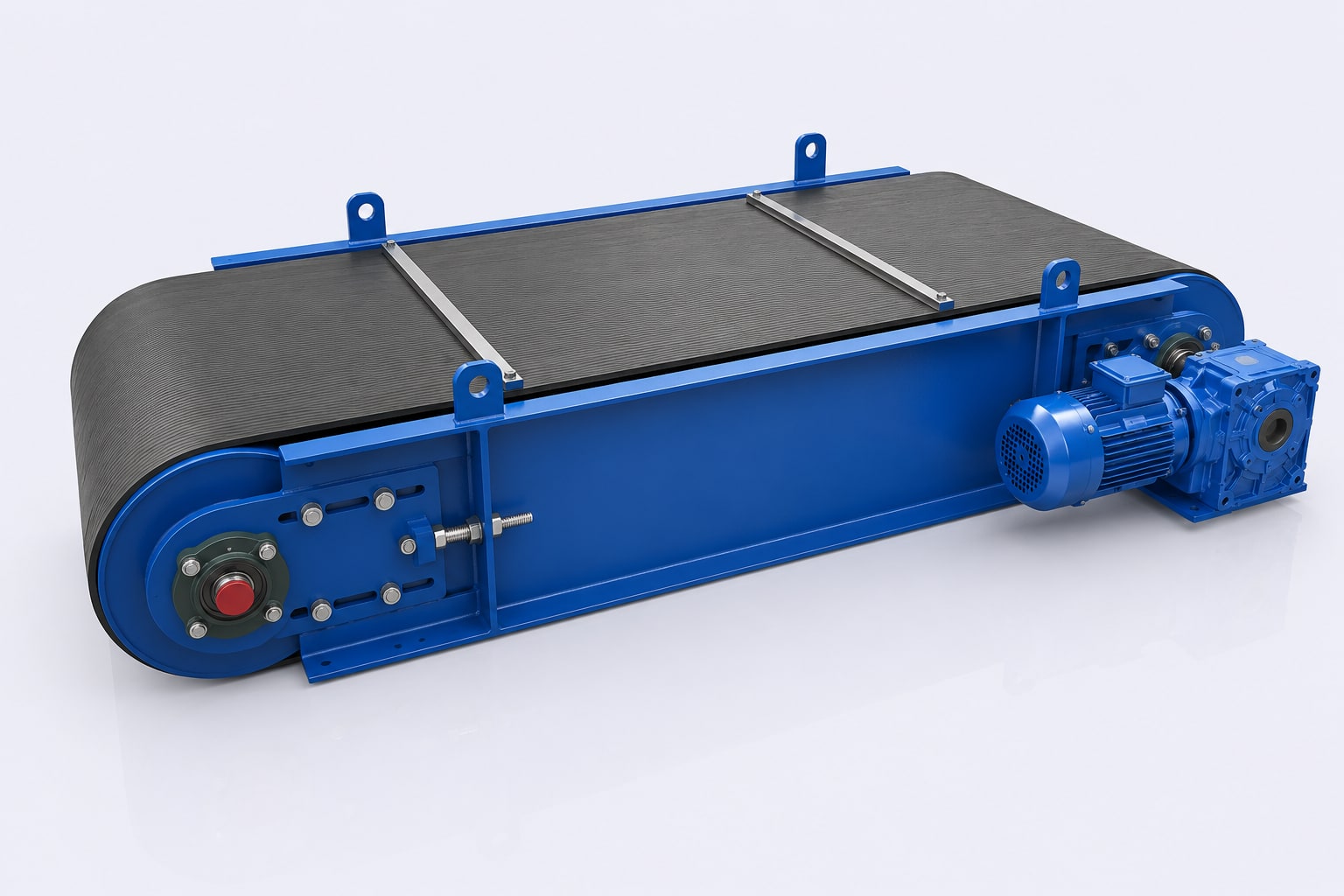
COWIN product image; final configuration is project-specific.
Key Takeaways
What the recorded sources say
The current source set consists of Eskom: “EAF reaches 67.96%, diesel expenditure falls by R4.8 billion, emissions outperform target and load reduction declines to just 3.4% of customers”; Mining Weekly: “Scale up hydrogen, global council urges amid growing energy security concerns”. These public updates provide context for South African industry and project planning. They do not identify a COWIN customer, purchase, local stockholding or operating result, and they do not establish that one magnetic separator configuration suits any named project. The engineering value of the sources is to prompt a disciplined review of material flow, equipment interfaces and the information required before a supplier can confirm selection.
This article therefore separates reported context from COWIN's process-selection guidance. Source titles, publishers, links and dates are retained for traceability. The discussion below is an original engineering interpretation and does not reproduce the source articles or infer commercial relationships.
Design for the real electrical environment
Where an electromagnetic solution is under review, the buyer should confirm supply voltage, frequency, protection philosophy, control-panel location, cable route and restart expectations after an outage. Ambient temperature, altitude, dust and ventilation can also affect the final arrangement. These inputs belong in the technical schedule so that electrical and mechanical responsibilities are coordinated before delivery, particularly at remote sites where replacement parts and specialist access may take longer.
Compare power demand with production consequence
A low connected load is not the only objective. The evaluation should include the production consequence of missed tramp metal, unplanned cleaning, overheating, control faults and maintenance access. A permanent magnet and an electromagnetic system have different power and operating characteristics, while manual-cleaning and self-cleaning arrangements create different labour and downtime demands. The useful comparison is therefore a duty-specific lifecycle review rather than a generic energy-efficiency claim.
Treat energy news as planning context
Electricity, fuel or renewable-energy announcements can affect operating assumptions, but they do not by themselves determine whether a permanent or electromagnetic system is preferable. Selection begins with the separation duty, burden, suspension height, cleaning arrangement and downstream risk. Energy context becomes relevant after those facts are known, when the team compares electrical infrastructure, controls, cooling, availability and lifecycle cost for technically suitable alternatives.
Establish a verified design basis
Record conveyor width, belt speed, maximum burden depth, material type, particle-size range, moisture and temperature at the proposed position. Add the expected ferrous object size, shape and frequency where observations exist. Values copied from an old drawing should be checked against the operating plant. A short design-basis sheet gives all parties the same reference and makes later changes visible before they affect manufacturing or installation.
Use observations instead of vague contamination labels
Terms such as light, severe or occasional contamination mean different things to different teams. Photographs, approximate dimensions, capture frequency and the process position provide a better basis for review. If reliable records do not yet exist, the project can define a short observation period and a consistent log. The resulting evidence supports equipment selection and gives maintenance teams a baseline for future comparison.
Define the downstream consequence
The protected asset may be a crusher, screen, mill, conveyor or product stream, and each has a different consequence when unwanted metal passes. The team should describe credible events and the operating response expected after detection or capture. This focuses the selection discussion on risk reduction and availability rather than treating magnetic strength or belt width as a complete specification.
Prepare commissioning evidence
Before startup, teams should confirm installation dimensions, rotation and discharge direction, electrical checks, guarding, isolation and the condition of the material path. Commissioning records should capture the operating settings and any controlled test used to confirm function. Training should cover normal inspection, abnormal events and who owns follow-up actions. These records become the reference for later troubleshooting.
Coordinate controls and interlocks
Run permissives, belt-speed inputs, local controls, alarms and emergency-stop interfaces should be documented when they form part of the selected configuration. The cause-and-effect description should state what happens during startup, a separator fault, a stopped conveyor and maintenance isolation. Clear boundaries between the equipment package and the plant control system prevent signals from being assumed by both parties or supplied by neither.
Evaluate lifecycle support
Selection should consider consumables, wear components, inspection skills, documentation and the time required to obtain replacement parts. Remote operations may prefer arrangements that simplify routine service, while high-throughput plants may place greater weight on continuous cleaning and planned redundancy. Lifecycle discussion should follow technical suitability and should not be used to justify equipment that does not meet the separation duty.
Where Permanent Overband Magnetic Separator may fit
Permanent Overband Magnetic Separator may be reviewed where its actual magnet system, cleaning method and installation arrangement match the confirmed duty. It is not a universal answer and no performance value should be inferred from this article. COWIN engineering would require the design basis, layout and operating objective before confirming a model, working position or project-specific capability. The product record and quotation must describe only the configuration under review.
Questions to resolve before a quotation
Can equipment be selected from conveyor width alone?
No. Width is one input. Burden depth, belt speed, suspension height, material behaviour, contamination, cleaning requirements, surrounding steelwork and downstream risk must also be reviewed.
Does the source announcement prove that a magnetic separator is required?
No. It provides industry context. The need and configuration must come from the process objective and verified site information.
What should the buyer send first?
Send a concise process description, dimensioned layout or photographs, material and throughput information, observed contamination details, environmental conditions and the downstream equipment or product-quality objective that requires protection.
Practical next steps
- Confirm the process objective and the consequence of unwanted metal.
- Measure the material and installation conditions at the proposed position.
- Define cleaning, discharge, controls, access and environmental requirements.
- Record assumptions and assign owners for missing information.
- Request a project-specific review before treating provisional data as a guarantee.
Sources and methodology
This source-based article was assembled from current public metadata and COWIN's verified product record. It distinguishes source facts from engineering guidance, uses only COWIN-owned product media and does not reproduce third-party reporting.
- Eskom: EAF reaches 67.96%, diesel expenditure falls by R4.8 billion, emissions outperform target and load reduction declines to just 3.4% of customers, published 18 September 2026.
- Mining Weekly: Scale up hydrogen, global council urges amid growing energy security concerns, published 18 September 2026.
Sources were accessed 19 September 2026. Final equipment configuration remains subject to project-specific engineering review.
Original Source
- Original title: EAF reaches 67.96%, diesel expenditure falls by R4.8 billion, emissions outperform target and load reduction declines to just 3.4% of customers
- Publisher: Eskom
- Author: Not specified by source
- Original publication time: 2026-09-18T13:41:20.000Z
- Collected by this site: 2026-09-19T15:47:54.695Z
- Read the original source
This article is based on public source information and independent analysis. Original reporting copyright belongs to the original publisher.